Smart House Construction Services in Bangalore
Bangalore has always been a city that embraces innovation. From tech parks to electric mobility, the city thrives on forward-thinking ideas. By 2026, this same mindset is transforming the world of smart house construction in Bangalore. What was once considered a luxury—smart construction—is now becoming the new standard.
For home builders like YV Homes, this shift means adopting technology-driven, sustainable, and data-backed House construction practices. For homeowners, it means smarter investments, reduced maintenance costs, and homes that stay efficient and future-ready for decades. It’s similar to upgrading from a basic phone to a smartphone—you don’t just get features; you get a better lifestyle.
2026: The Future of Smart House Construction in Bangalore
By 2026, Bangalore’s housing market will be driven by climate awareness, technology adoption, regulatory evolution, and buyer expectations. Builders are no longer judged only by price and speed, but by intelligence, transparency, and sustainability of house construction
Smart House Construction vs Smart Home Devices
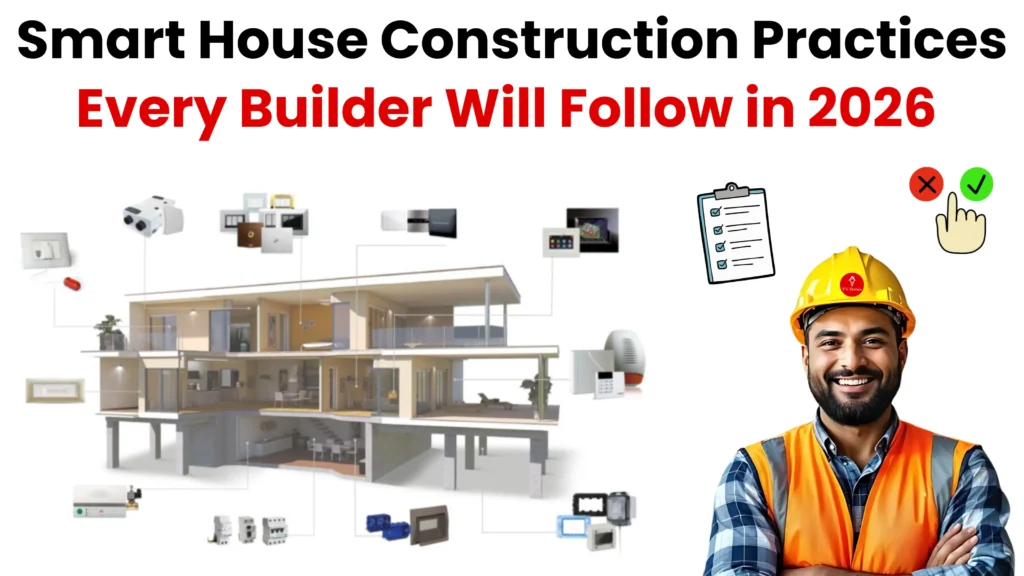
- A smart home is no longer limited to app-controlled lights or voice assistants. In 2026, true intelligence begins at the smart house construction stage itself. The structure is optimised, monitored, and engineered to adapt to future needs.
- Data-driven planning influences everything—from material selection to layout orientation. Sustainability is integrated into the blueprint from day one. The result is a home that performs intelligently and efficiently.
AI-Driven Design and Planning for Smarter Homes
- Artificial Intelligence helps builders like YV Homes analyze thousands of layout combinations to achieve the best balance of space, ventilation, natural lighting, and structural efficiency. This is especially valuable in Bangalore’s compact plot sizes.
Predictive Cost and Time Estimation Using AI
AI tools forecast material price fluctuations, labor requirements, and possible delays—helping both builders and homeowners plan better.
How AI Helps Reduce Budget Overruns
By identifying risks early, builders can prevent unexpected expenses—one of the biggest concerns for homeowners.
Digital Twin Technology in Smart House Construction in Bangalore
- A digital twin is a virtual 3D replica of the home created before construction begins. Every pipe, beam, and electrical line is digitally mapped.
Benefits for Builders and Homeowners
- Builders can detect issues before they occur, homeowners get complete clarity and transparency, and post-handover surprises are minimized.
- YV Homes uses digital twin modeling to ensure precision and trust throughout the construction journey.
Sustainable and Climate-Responsive House Construction Practices in Bangalore
Smart homes in 2026 use passive design strategies such as optimized orientation, natural shading, and cross-ventilation. These reduce heat gain and energy consumption—ideal for Bangalore’s evolving climate.
Carbon-Neutral and Eco-Friendly Building Materials
Materials like low-carbon cement, recycled steel, and eco-friendly blocks are becoming standard choices in modern house construction.
Modular and Prefabricated House Construction Methods in Bangalore
Faster Builds with Factory-Made Components
- Walls, slabs, and even bathrooms are manufactured off-site and assembled on-site, ensuring faster construction and higher precision.
Improved Quality Control and Reduced Waste
- Prefabrication reduces material waste and ensures consistent quality—something YV Homes prioritizes in every project.
IoT-Enabled Structural Monitoring Systems
Sensors Embedded in Foundations and Slabs
- Smart sensors track load, vibration, and moisture levels throughout the structure.
Real-Time Alerts for Safety and Maintenance
- Builders and homeowners receive alerts before minor issues escalate into major repairs.
Energy-Efficient Electrical and Power Systems
Solar-First Planning in House Construction
- Solar panels are integrated into the design phase—not added as an afterthought.
Smart Grids and Home Energy Storage Solutions
- Homes intelligently manage power usage, reducing electricity bills and improving reliability.
Advanced Water Management Systems for Smart house construction in Bangalore
Smart Rainwater Harvesting Technology
- Automated systems track rainfall, storage levels, and usage patterns.
Automated Greywater Recycling Systems
- Water from sinks and showers is treated and reused for flushing and landscaping—ideal for Bangalore’s water-scarcity challenges.
Smart Safety and Security Home Integration
Construction-Stage Safety Technologies
- Wearables and site sensors help reduce accidents and improve worker safety.
Built-In Residential Security Planning
- Security features are integrated into the structure during construction, ensuring long-term protection.
BIM (Building Information Modelling) as a Standard Practice in Bangalore
BIM for Design, Execution, and Maintenance
- BIM connects architects, engineers, contractors, and homeowners on a single platform.
Transparency and Collaboration for Homeowners
- You know exactly what is being built, how it’s being built, and why—eliminating guesswork.
Compliance with Future-Ready Building Regulations
BBMP, BDA, and Green Building Norms
- Smart builders like YV Homes align early with evolving regulations to ensure smooth approvals.
ESG and Sustainability Reporting for Builders
- Developers track environmental and social impact, increasing trust and credibility.
Skilled Workforce and Technology-Driven Training
Upskilling Engineers and Contractors
- Digital tools require advanced skills, and builders are investing heavily in training.
Automation and Robotics in Construction Sites
- Robotics assist in bricklaying, surveying, and material handling—improving speed and accuracy.
Cost Implications of Smart House Construction in Bangalore
Is Smart Construction More Expensive?
- Initial costs may be slightly higher, but operational savings are significant.
Long-Term ROI and Property Value Benefits
- Smart homes age better, rent faster, and sell at higher value—making them a strong investment for Bangalore homeowners.
Homeowner Expectations from Builders in 2026
As we look ahead to 2026, the relationship between homeowners and builders will be defined by transparency, innovation, and sustainability. The House Construction industry is evolving rapidly, and with YV Homes leading the way, homeowners should expect builders to not only deliver quality structures but also act as trusted partners in realising long-term visions for their homes.YV Homes will increasingly integrate smart technologies, offering residences that are energy-efficient, digitally connected, and adaptable to changing lifestyles. Homeowners can anticipate greater use of eco-friendly materials, renewable energy solutions, and designs that prioritise both comfort and environmental responsibility. This shift reflects YV Homes’ broader commitment to sustainable living, where modern convenience is balanced with ecological awareness.
Conclusion
By 2026, smart house construction in Bangalore will no longer be optional—it will be the norm. Builders like YV Homes who embrace technology, sustainability, and transparency will lead the transformation. Homeowners who understand these practices will make better, future-proof investments.
Contact YV Homes now to begin your journey toward a smarter, greener, and more personalised home in 2026.
FAQ
Yes. Smart house construction is ideal for villas, duplexes, and plotted developments where customisation is essential.
No. Most smart practices align with BBMP, BDA, and green building regulations.
Partially. While some features can be retrofitted, maximum benefits come when planned from scratch.
Typically 20–40% lower annual energy costs.
Top builders like YV Homes already follow these practices. By 2026, most builders will adopt them